
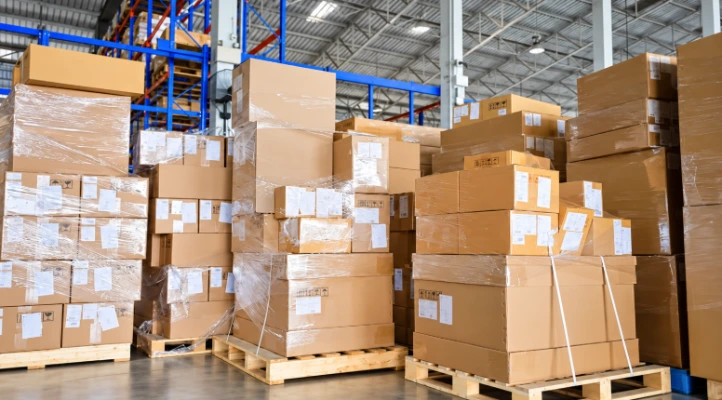
Manufacturers can synchronise bulk stock storage with production by including off-site finished goods in the same planning process as stock held at the factory. Before scheduling the next production run, you need to know what stock is on hand, what is committed to upcoming orders, what needs replenishing and when pallets need to move.
At TW Logistics in Cranbourne West, our 3PL warehousing services support businesses requiring bulk pallet storage alongside commercial freight distribution. You manage your production and replenishment plan, while we store and move full pallets around your agreed requirements.
5 Steps to Align Off-Site Stock with Production
A practical approach is to:
- Check finished goods stock at your site and in off-site storage.
- Subtract stock committed to upcoming orders.
- Compare available stock with your production schedule.
- Set replenishment points based on stock turnover, production lead time and your required stock buffer.
- Plan incoming and outgoing pallet movements with your third-party warehouse.
This keeps outsourced warehousing connected to production requirements rather than treating off-site stock as separate inventory.
Signs Your Storage and Production Are Out of Sync
Problems can arise when production decisions are made without considering finished goods already held off-site.
You may have a large quantity of one SKU in storage while another production run is scheduled. A fast-moving product may repeatedly approach its minimum stock level before replacement stock is ready. Your team may also be planning production based only on inventory at the factory rather than total stock on hand.
If finished goods are physically taking over production areas, our guide to using 3PL warehousing to free up factory floor space covers that specific problem.
For ongoing operations, the focus is different. Bulk 3PL warehousing can support your production plan by providing off-site finished goods storage while you manage stock availability and replenishment requirements.
Match Off-Site Stock with Your Production Schedule
Before confirming another production run, check how much of that finished SKU you already have available.
For example, you have 160 pallets of one SKU in off-site storage and 90 are committed to customer orders over the next month. That leaves 70 pallets available.
If another production run of 100 pallets is scheduled, completing it would leave 170 pallets available after those committed orders are accounted for.
Depending on expected demand and the stock buffer you want to maintain, that may be more inventory than required. You can then assess whether the production quantity or timing should change.
The reverse also applies. If stock on hand is falling and a product has a long production lead time, the next run may need to start earlier.
This is the core relationship between bulk stock storage and production planning. Production decisions should account for finished goods held in pallet storage, not just what remains at the manufacturing site.
Set Replenishment Points for Finished Goods
A replenishment point gives you a trigger for when another production run needs to be considered.
Your reorder point will depend on stock turnover, production lead time, upcoming orders and the safety stock or stock buffer your business needs.
For example, if a finished product moves at 25 pallets per week and takes three weeks to manufacture, waiting until only 25 pallets remain may leave you short before replacement stock is ready.
Setting the trigger earlier gives production enough time to replenish the finished goods inventory.
When stock is held across your site and outsourced warehousing, base that decision on your total available finished goods, rather than looking at either location in isolation.
Plan Warehouse Movements Around Production
Once production requirements are clear, the next step is coordinating when full pallets will move into and out of storage.
If a larger production run is coming, tell us the expected pallet volume and timing in advance. We can consider the planned receival against your agreed warehousing requirements before the finished goods are ready to move.
Outbound stock matters too. If 80 pallets are expected to leave off-site storage before another 120 arrive from production, both movements affect the amount of stock being held.
Where higher production is temporary, our guide to overflow warehousing for seasonal stock spikes covers short-term increases in storage requirements.
Planning these movements early keeps off-site storage aligned with changes in production and finished goods volumes.
Connect Stored Stock with Commercial Freight Distribution
Finished goods storage also needs to account for what is expected to leave the warehouse.
Knowing your expected outbound pallet quantities, frequency and destinations helps you understand how quickly stock will be drawn down and when replenishment may be required.
TW Logistics provides commercial freight transport alongside bulk warehousing, supporting suitable palletised freight movements for businesses across Melbourne and Victoria.
If a large outbound movement will significantly reduce stock of one SKU, your production team can factor that change into the next production run.
Where freight volumes vary, our guide to FTL and LTL freight options for businesses explains the difference between full truckload and less-than-truckload transport.
Keep Your 3PL Updated as Production Changes
Production forecasts do not need to be perfect, but meaningful changes should be communicated early.
Before onboarding, having [the information a 3PL needs before handling your stock](/3pl-stock-information-before-onboarding/) gives us a clearer understanding of your palletised stock and storage requirements.
From there, let us know when planned production volumes, pallet quantities or expected stock movements change significantly.
You decide what needs to be produced, your required stock buffer and when replenishment is needed. We provide the bulk storage and commercial transport for the agreed pallet movements.
Align Bulk Stock Storage with Production Requirements
Synchronising off-site storage with production comes down to knowing what finished goods you have, what is already committed, what needs replenishing and what the next production run will add.
TW Logistics provides bulk 3PL warehousing from Cranbourne West for manufacturers and other businesses managing large volumes of palletised stock.
If you need off-site storage that works around your production requirements, contact us today to discuss your bulk storage and transport requirements to see if we’re the right operational fit.