
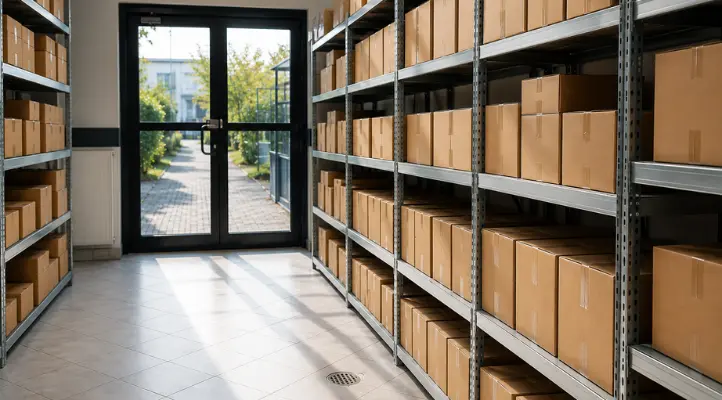
Planning your warehousing needs as you grow means matching your storage approach to each stage of your business, from a small in-house setup in the early days, to flexible overflow support as orders increase, through to a dedicated 3PL warehousing partnership once growth becomes consistent.
Warehousing is rarely a one-off decision. It is something that needs to evolve alongside your business, and businesses that plan ahead avoid the scramble that comes with outgrowing their storage mid-peak season.
Why Warehousing Planning Gets Overlooked
Most Australian businesses do not start out thinking about warehousing strategy. In the early stages, storage is whatever space is available, a spare room, a garage, a small commercial unit or a corner of a workshop. There were over 2.7 million actively trading businesses in the Australian economy at 30 June 2025, with the total number of businesses growing by 2.5 per cent that year alone.
With that much business growth happening across the country, a lot of businesses are quietly reaching the point where their original storage setup no longer fits, often before they have thought to plan for it.
Warehousing tends to become a priority only once it becomes a problem, stock overflowing into walkways, missed dispatch deadlines or a scramble for extra space during a busy period. Planning ahead, stage by stage, means these pressure points can be managed before they affect your customers.
Stage 1: Startup, Getting the Basics Right
In the early stages, the priority is usually cash flow and getting products to market, not warehousing infrastructure. Most startups manage storage informally, and that is often the right call while volumes are low and unpredictable.
At this stage, it is worth keeping a simple record of:
- How much physical space your current stock takes up
- How quickly that space is filling as orders grow
- Whether storage is starting to affect other parts of the business, such as workspace or safety
These early indicators help you recognise when informal storage is starting to limit growth, rather than support it.
Stage 2: Growth, Managing Increasing Volume
As order volumes increase, many businesses reach a point where their original storage space becomes genuinely constrained. This is often the stage where businesses first consider external storage support, whether that is additional leased space or a short-term overflow arrangement with a warehousing provider.
Rather than committing to a long-term solution straight away, this stage is about testing flexible options:
- Using overflow pallet storage during peak periods rather than expanding permanent premises
- Getting a clearer picture of how many pallet positions your stock actually requires
- Understanding how freight and warehousing work together, since growing order volumes usually mean more frequent freight movements as well
If you are already experiencing space pressure rather than planning ahead of it, our guide on signs it is time to outsource your warehousing covers the practical indicators in more detail.
Stage 3: Scale-Up, Building a Long-Term Warehousing Strategy
Once growth becomes consistent rather than occasional, warehousing shifts from a short-term fix to a long-term operational decision. At this stage, businesses typically benefit from a dedicated 3PL warehousing partnership rather than ad hoc storage arrangements.
Key considerations at the scale-up stage include:
- Full pallet in and out warehousing that scales with demand, rather than fixed leased space that cannot flex up or down
- Reliable freight coordination between your warehouse and your customers or retail partners
- A logistics partner with the systems and experience to support consistent growth, not just extra square metres
Choosing the right partner matters more at this stage than earlier ones, since your warehousing provider becomes a genuine extension of your operations. Our guide on choosing the right 3PL provider outlines what to look for when making that decision.
Planning Ahead, Not Just Reacting
The businesses that manage growth most smoothly are usually the ones that treat warehousing as part of their growth plan, not a problem to solve after the fact. That means periodically reviewing your storage needs against your actual and projected order volumes, rather than waiting until space runs out.
A few practical habits help:
- Reviewing pallet or stock volume every few months, not just when space feels tight
- Factoring warehousing and freight costs into growth forecasts, alongside stock and staffing
- Building a relationship with a warehousing and transport partner early, so support is already in place when volumes increase
How TW Logistics Supports Growing Businesses
TW Logistics provides full pallet 3PL warehousing and freight transport solutions across Melbourne and regional Victoria, designed to scale with your business rather than lock you into fixed space or rigid contracts. Whether you are managing early growth with occasional overflow storage, or building a long-term warehousing strategy as a scale-up, our team can help you plan the right approach for where your business is now, and where it is heading.
Call our team today to talk through your growth plans and warehousing needs.